
Posted on Google William Elliott15 April 2025
Trustindex verifies that the original source of the review is Google.
h&s Surveyors conducted a level 2 survey ahead of our house purchase last year. Their communication was excellent from start to finish, and their report was thorough and very well written. One year on, the report describes everything we've learned from living in our home and we haven't hesitated to recommend h&s Surveyors to our friends and family. Hopefully, we won't need to move home for some time, but when we do, we will use h&s Surveyors.Posted on GoogleKerry Mann26 March 2025Wonderful and simple process to book in our survey and received back very quickly. Thorough and insightful report and lovely team to work with. Thank you so much.Posted on GoogleJennifer Harvey14 March 2025Absolutely first class service, I had additional questions after the survey and nothing was too much trouble. I would highly recommend this company.Posted on GooglePaul Sampson10 February 2025H&S provided an efficient service at a very competitive price. Communication was great. The report was detailed and comprehensive and even our solicitor was impressed with it. We would use them again.Posted on GoogleMike McGrove1 February 2025Andy provided a really thorough RICS Level 3 survey for us, which was clear and easy to understand, for an excellent price. Would definitely recommend.Posted on GoogleSimone Talfourd23 January 2025We recently had a Grade 3 survey conducted as part of the process of purchasing a house, and we couldn’t be happier with the service provided! The survey was incredibly thorough, detailed, and professionally executed, giving us a clear and comprehensive understanding of the property's condition. The report was not only easy to understand but also highlighted important areas to address, which has been invaluable in helping us plan for possible future works. Chris' expertise, attention to detail, and willingness to answer any questions made the whole process seamless and reassuring. We truly feel that this survey was worth every penny and gave us the confidence to move forward with our purchase. Highly recommend to anyone looking for reliable and meticulous survey services!Posted on GoogleAidan Dominy21 January 2025Survey was promptly booked with helpful admin staff responding quickly by email. Survey was detailed (including plenty of photos) and arrived within the time promised. Seems to be much better value for level 2 surveys than other local providers. Would recommend - thank you!Posted on Googlesylvia punter7 November 2024Chris is knowledgeable, efficient and helpful and provides an excellent professional servicePosted on GoogleTeresa Smaridge25 July 2024This was the second time using H&M Surveyors. They were quick to respond to my initial enquiry and also arranging a date for the survey. Chris phoned me beforehand to ask if I had any particular concerns about the property. The level 2 homebuyers report was provided in the timescale advised and Chris was also happy to discuss the findings of the survey once I had seen the report, which I found very useful. Chris was friendly and explained everything I needed to know. Would definitely recommend h&s and will be happy to use again in the future.
Common Issues a Building Survey Can Uncover (and How to Deal with Them)
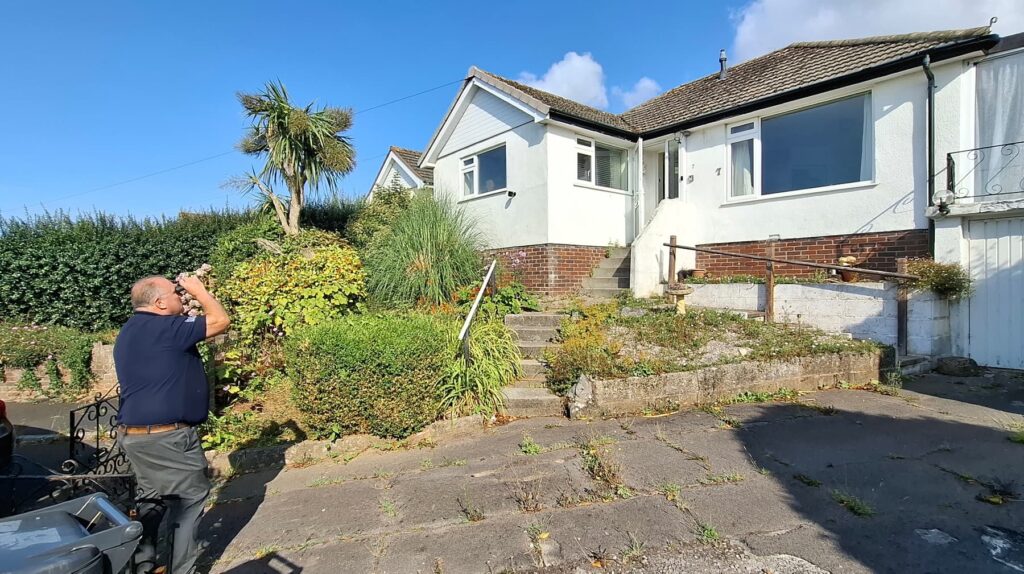
Buying a property is probably the biggest financial commitment that most people will ever make. It’s surprisingly easy to be charmed by a home’s character, space and appearance, while overlooking what might be hidden beneath the surface. A professional building survey can help protect you as a buyer and help you to understand areas that may need attention.
If you’re not sure which type of survey is right for your home purchase, our helpful guide on choosing the right survey can help. This guide, however, focuses on the RICS Level 3 Building Survey, the most comprehensive type of survey available, and the appropriate choice for many types of properties.
Why a RICS Level 3 Building Survey Matters
Many people, particularly first-time buyers, assume that a property valuation is the same as a survey. It isn’t. Mortgage lender valuations exist to confirm that the property provides sufficient security for the lender. They are not an assessment of the property’s condition and should not be relied upon to protect your interests as a buyer.
A RICS Level 3 Building Survey is a comprehensive, independent assessment of a property’s condition. It identifies defects, assesses their severity, and advises on what action (if any) is required. The inspection covers a detailed visual appraisal of the building and its services, including roofs, walls, floors, windows, doors, cellars, garages, and outbuildings.
The report provides a thorough picture of the main construction elements, their condition, and the risk of any hidden defects. It also includes guidance on maintenance and the likely timescales for any remedial works that may be required.
RICS Level 3 Building Surveys can be carried out on any residential property, but they are particularly well-suited to older, larger, or non-standard homes. This includes Grade I and II Listed Buildings, properties of non-traditional construction, and those that have been significantly altered or extended. They are also the appropriate choice where major refurbishments are planned.
Common Issues Uncovered By Surveys
Dampness
Damp is one of the most frequently flagged issues in surveys. It can take several forms:
- Rising damp occurs when moisture travels upwards through walls from the ground, often where damp-proof courses have failed or are not present.
- Penetrating damp enters through defective roofing, deteriorating masonry, or failed window and door seals.
- Condensation can occur if properties are not adequately heated and ventilated, or where insulation is poor.
Left untreated, damp can cause severe damage to plasterwork, timber, and finishes, and can create conditions for mould growth. Remediation costs vary considerably depending on the source and extent of the problem.
Structural Movement
Not all wall cracks are cause for concern, but some indicate more serious underlying problems. Subsidence (where the ground beneath a property shifts) is one of the most significant issues a surveyor can identify. It can be costly to address and should always be investigated thoroughly.
Our guide to what subsidence is and how it affects property explains the key signs to look out for. Our surveyors will advise on whether any cracking present may be an indication of an underlying problem and appropriate repairs or investigations that may be necessary.
Roof Problems
A failing roof is among the most costly repairs a buyer can face. When carrying out a RICS Level 3 Building Survey, our surveyors will inspect the roof covering and structure and will commonly identify issues such as missing or slipped tiles, defective flashings, or deteriorating felt underlays.
Timber Defects
Wet rot, dry rot and wood-boring insect infestations can all present a significant risk to a building if they are left unaddressed. Our surveyors are trained to identify the signs of timber defects and advise on appropriate actions to rectify the problem.
Electrical and Plumbing Issues
Older systems can present serious safety risks and will likely require attention, particularly if you are planning to make alterations to an older property once you have occupied. Our surveyors will inspect and report on each of the services. However, we are not able to offer specialist advice. If there is a problem, we will refer you to a specialist so that you have a clear understanding of the costs involved.
Invasive Plants
Japanese knotweed is an invasive species that can damage foundations, drainage systems and boundary structures. Its presence must be declared during a property sale and may even affect mortgage lending. Our surveyors are trained to identify invasive plant species and are able to advise on the implications this may have on market value.
Unapproved Alterations
Extensions, loft conversions, and other structural works often require planning permission and/or building control approval. Where works have been carried out without the necessary consent, this can create complications, particularly if enquiries are not raised during conveyancing. Our surveyors will highlight legal matters for your solicitor to raise enquiries and obtain the necessary documentation.
What to Do When Issues Are Found
Receiving a survey report with several highlighted issues can feel daunting, but it doesn’t necessarily mean your purchase is derailed. The best approach is a measured, informed one, rather than a reactive one.
Start by speaking directly with your surveyor. They can help you understand which issues are cosmetic and which require more urgent attention.
For significant defects, such as structural movement, roof failure, or extensive damp, it’s worth obtaining specialist quotes before proceeding further. This will give you a clearer picture of what any remedial works are likely to cost if you proceed with the purchase.
Once you have obtained this information, you are well placed to negotiate. You can ask the seller to carry out remedial works before exchange, request a price reduction, or in some cases, withdraw from the purchase altogether.
While a RICS Level 2 HomeBuyer Survey will flag the most visible and pressing issues, the depth of a RICS Level 3 Building Survey gives you the information you need to make a fully informed decision, and to negotiate from a stronger position.
Get a Free Personalised RICS Level 3 Building Survey Quote
The exact cost of a RICS Level 3 Building Survey depends on the type, size, and value of the property in question. Our team is happy to advise on which level of survey is right for your property. At Hammond & Shaw, we’ll always discuss any specific concerns before the inspection takes place, and we’re happy to talk through the findings once you’ve had a chance to read the report.
For more information, to discuss your requirements, or obtain a personalised quote, contact Hammond & Shaw today.
Published on: