
Posted on Google William Elliott15 April 2025
Trustindex verifies that the original source of the review is Google.
h&s Surveyors conducted a level 2 survey ahead of our house purchase last year. Their communication was excellent from start to finish, and their report was thorough and very well written. One year on, the report describes everything we've learned from living in our home and we haven't hesitated to recommend h&s Surveyors to our friends and family. Hopefully, we won't need to move home for some time, but when we do, we will use h&s Surveyors.Posted on GoogleKerry Mann26 March 2025Wonderful and simple process to book in our survey and received back very quickly. Thorough and insightful report and lovely team to work with. Thank you so much.Posted on GoogleJennifer Harvey14 March 2025Absolutely first class service, I had additional questions after the survey and nothing was too much trouble. I would highly recommend this company.Posted on GooglePaul Sampson10 February 2025H&S provided an efficient service at a very competitive price. Communication was great. The report was detailed and comprehensive and even our solicitor was impressed with it. We would use them again.Posted on GoogleMike McGrove1 February 2025Andy provided a really thorough RICS Level 3 survey for us, which was clear and easy to understand, for an excellent price. Would definitely recommend.Posted on GoogleSimone Talfourd23 January 2025We recently had a Grade 3 survey conducted as part of the process of purchasing a house, and we couldn’t be happier with the service provided! The survey was incredibly thorough, detailed, and professionally executed, giving us a clear and comprehensive understanding of the property's condition. The report was not only easy to understand but also highlighted important areas to address, which has been invaluable in helping us plan for possible future works. Chris' expertise, attention to detail, and willingness to answer any questions made the whole process seamless and reassuring. We truly feel that this survey was worth every penny and gave us the confidence to move forward with our purchase. Highly recommend to anyone looking for reliable and meticulous survey services!Posted on GoogleAidan Dominy21 January 2025Survey was promptly booked with helpful admin staff responding quickly by email. Survey was detailed (including plenty of photos) and arrived within the time promised. Seems to be much better value for level 2 surveys than other local providers. Would recommend - thank you!Posted on Googlesylvia punter7 November 2024Chris is knowledgeable, efficient and helpful and provides an excellent professional servicePosted on GoogleTeresa Smaridge25 July 2024This was the second time using H&M Surveyors. They were quick to respond to my initial enquiry and also arranging a date for the survey. Chris phoned me beforehand to ask if I had any particular concerns about the property. The level 2 homebuyers report was provided in the timescale advised and Chris was also happy to discuss the findings of the survey once I had seen the report, which I found very useful. Chris was friendly and explained everything I needed to know. Would definitely recommend h&s and will be happy to use again in the future.
What is Subsidence? Signs, Causes and What Buyers Should Do
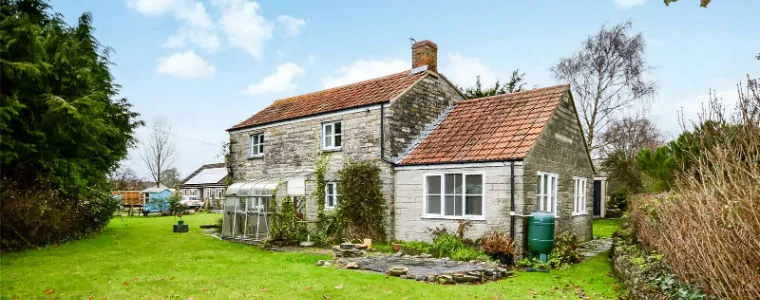
Subsidence is one of the property defects that buyers and homeowners worry about most. It can affect a building’s structure, value, mortgageability and insurance, so it is important to understand the warning signs before you buy or ignore a potential problem.
At H&S Surveyors, we regularly inspect properties across Devon and South Devon where buyers have concerns about cracking, movement or possible subsidence. In many cases, cracks are not as serious as they first appear, but some cracks do mean that further investigation is required.
What is subsidence?
Subsidence is the downward movement of the ground beneath a property’s foundations. When the ground loses strength, shrinks or collapses, part of the building may move downwards with it.
This movement can lead to cracking, distortion and other structural issues. Subsidence is different from normal settlement, which can happen as a newer building adjusts after construction. It is also different from heave, where the ground moves upwards.
Not every crack means subsidence. However, if movement is ongoing or linked to unstable ground, it should be assessed by a qualified surveyor.
What causes subsidence?
Subsidence can happen for several reasons. Some properties are more vulnerable because of their location, age, soil type or nearby trees.
Common causes include:
- Clay soil shrinkage – clay soils can shrink during dry weather as moisture levels fall.
- Tree roots – large trees and shrubs can draw moisture from the ground, especially in clay areas.
- Leaking drains or water pipes – water can wash away or soften supporting ground beneath foundations.
- Historic mining or ground voids – older mine workings, cavities or unstable ground can collapse.
- Poor foundations – some older properties may have shallow foundations that are more affected by ground movement.
- Nearby excavation or building work – changes to the surrounding ground can sometimes affect stability.
What are the signs of subsidence?
A Chartered Surveyor can inspect visible signs of movement and advise whether further investigation is needed. This may include reviewing crack patterns, external ground levels, drainage, nearby trees, previous repairs and the general construction of the property.
For older, altered properties or properties with significant cracking, a RICS Level 3 Building Survey is often the most suitable option. It provides a more detailed assessment of the building’s condition and can help identify whether structural movement may be present.
In some cases, your surveyor may recommend further advice from a structural engineer, drainage specialist or arboricultural consultant. Crack monitoring may also be suggested where it is unclear whether movement is ongoing.
What should you do if you suspect subsidence?
If you already own the property, avoid rushing into repairs before the cause is understood. Simply filling cracks may hide the symptom without dealing with the underlying issue.
If you are buying, speak to your surveyor before exchange. Depending on the findings, you may decide to request further investigations, obtain repair estimates, renegotiate the purchase price or reconsider whether the property is right for you.
Early advice can help you avoid unnecessary worry and make a more informed decision.
Get clear advice before you buy
Subsidence can sound alarming, but not every crack means a serious structural problem. The important thing is to get the right professional advice at the right time.
H&S Surveyors provides RICS Level 2 HomeBuyer Surveys, RICS Level 3 Building Surveys and property valuation services across Devon and South Devon, including Newton Abbot, Exeter, Torquay, Paignton, Plymouth, Totnes, Teignmouth and surrounding areas.
If you are concerned about cracking, movement or possible subsidence, contact H&S Surveyors for straightforward advice and a free, no-obligation quote.
What are the signs of subsidence?
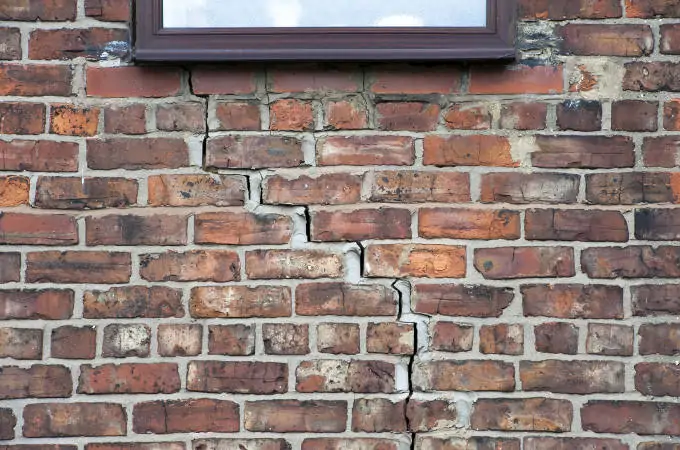
The most obvious warning sign is cracking, but the type, shape and location of the crack matters. Subsidence cracks are often diagonal, wider at one end and commonly found around doors, windows or where extensions meet the original building.
Other signs may include:
- Doors or windows sticking suddenly
- Cracks appearing internally and externally in similar locations
- Sloping or uneven floors
- Gaps opening between walls, ceilings or skirting boards
- Wallpaper tearing or rippling without an obvious cause
- Cracks becoming wider over time
- Drainage problems or signs of leaking services
Small hairline cracks are common in many properties and are not always a major concern. The key question is whether movement is historic, minor, seasonal or ongoing.
Why subsidence matters when buying a property
Subsidence can affect more than the condition of a home. It may influence the property’s value, future saleability, insurance premiums and mortgage lending.
If you are buying a property with visible cracking or signs of movement, it is important to understand the likely cause before exchange of contracts. Without professional advice, you may not know whether the issue is cosmetic, historic or evidence of a more serious structural problem.
A mortgage valuation is not the same as a survey. A lender’s valuation is mainly for the mortgage provider and does not give you detailed advice about cracking, movement or structural defects.
How can a surveyor help?
A Chartered Surveyor can inspect visible signs of movement and advise whether further investigation is needed. This may include reviewing crack patterns, external ground levels, drainage, nearby trees, previous repairs and the general construction of the property.
For older, altered properties or properties with significant cracking, a RICS Level 3 Building Survey is often the most suitable option. It provides a more detailed assessment of the building’s condition and can help identify whether structural movement may be present.
In some cases, your surveyor may recommend further advice from a structural engineer, drainage specialist or arboricultural consultant. Crack monitoring may also be suggested where it is unclear whether movement is ongoing.
What should you do if you suspect subsidence?
If you already own the property, avoid rushing into repairs before the cause is understood. Simply filling cracks may hide the symptom without dealing with the underlying issue.
If you are buying, speak to your surveyor before exchange. Depending on the findings, you may decide to request further investigations, obtain repair estimates, renegotiate the purchase price or reconsider whether the property is right for you.
Early advice can help you avoid unnecessary worry and make a more informed decision.
Get clear advice before you buy
Subsidence can sound alarming, but not every crack means a serious structural problem. The important thing is to get the right professional advice at the right time.
H&S Surveyors provides RICS Level 2 HomeBuyer Surveys, RICS Level 3 Building Surveys and property valuation services across Devon and South Devon, including Newton Abbot, Exeter, Torquay, Paignton, Plymouth, Totnes, Teignmouth and surrounding areas.
If you are concerned about cracking, movement or possible subsidence, contact H&S Surveyors for straightforward advice and a free, no-obligation quote.
Published on:
Last updated: 18th August 2026